



We practice a minimally invasive approach to your foot or ankle problem with surgery as the last option.
We practice a minimally invasive approach to your foot or ankle problem with surgery as the last option.
Trusted Experts in Foot Care
Avid Foot & Ankle is a full service podiatric center dedicated to helping our patients achieve the best possible foot and ankle health. We create customized treatment plans that are focused on the individual’s needs, condition, and lifestyle. Our practice serves the communities of Little Elm, Prosper, Frisco, Savannah and Aubrey!
We offer a wide range of foot and ankle treatments with a special interest in sports medicine and both conservative and surgical interventions. We welcome patients of all ages including pediatrics and adolescents. Athletes and those who lead an active lifestyle are also encouraged to come and discover our non-invasive alternative treatments for their foot and ankle ailments.
Our office staff is always friendly and accommodating. We thoroughly clean and disinfect our office after every patient visit to ensure the health and safety of both our staff and patients.
Welcome to our practice where we have an avid interest in your foot and ankle health!
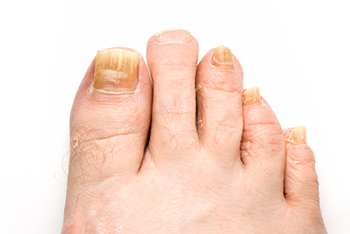
The area of the toes is generally warm and damp, unfortunately making it a great area for fungus to grow. If left untreated, the fungal infection can spread, which is why it’s so important to get professional help early on and look into your treatment options.
Fungal infections occur due to fungus getting through the cracks of the toes or cuts in your skin. Common signs that you may have a fungal infection include thicker than normal toenails, oddly shaped toenails, discoloration, a yellowish hue to the nail, and separation of the nail and nail bed. Fungal infections can affect anyone but are most common among men, those with diabetes or athlete’s foot, and smokers. The risk of having toenail fungus also increases as you age, if another family member has it, and if you have a weaker immune system.
To avoid getting a fungal infection, it’s important that you wash your feet daily with soap and water, making sure to get in between your toes, and dry the feet well. When cutting your toenails, make sure the clippers you’re using are clean and that you’re cutting straight across. It’s also important that you wear shoes in areas where fungus can thrive, such as wet public places like swimming pools or locker rooms.
If you believe you’re experiencing a fungal toenail infection, we recommend that you speak with a podiatrist as soon as possible for a proper diagnosis and suggested plan for treatment.
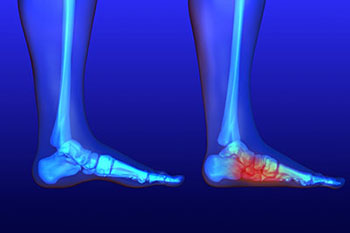
Flat feet is a condition that affects those who have little to no arch in their feet. When you stand, a person who doesn’t have flat feet will have a gap from the inner part of their feet to the floor, due to the normal arch that slightly rises off the ground. Those with flat feet will experience no such gap. While there are some people who experience no issues with their flat feet, it’s not uncommon for those with this condition to experience discomfort or pain.
Flat feet may cause a certain level of pain due to strained muscles and connecting ligaments. Those not afflicted by flat feet are able to get support while walking by the spring that the arch provides, which in turn, helps to distribute your body weight while taking steps. When the arch is no longer present, there is a larger amount of pressure on your muscles and ligaments in the feet, which is why they become strained and may cause you to feel pain.
There are many reasons that play a role in why a person may develop flat feet. For instance, certain genetic factors passed down from parents can lead to flat feet. Children may appear to have flat feet; however, their arches should develop over time. Having overall weak arches, a foot or ankle injury, arthritis, or a muscle or nervous system disease may all increase your likelihood of having flat feet. Tarsal coalition, a foot condition causing the fusion of bones in the feet, may also play a part in developing flat feet. Other common factors that are linked to flat feet include diabetes and obesity.
To manage the discomfort that may come with flat feet, we recommend that your practice exercises to help ease your pain. Heel cord stretches are a great way to stretch your Achilles tendon and help loosen up calf muscles that are often strained due to flat feet. Placing a golf ball under your foot and rolling it back and forth while seated is another great stretch, especially for your plantar fascia ligament.
When it comes to treating flat feet or fallen arches, it’s suggested you get plenty of rest. Frequently ice the affected area to help reduce swelling. Performing daily stretches are a great way to loosen up your muscles and relieve strain. It may also be beneficial to look into orthotics or shoe inserts to help relieve the pain.
If you’d like more information on how to treat discomfort you’re feeling because of flat feet, consult with a podiatrist for the best treatment options for your case.
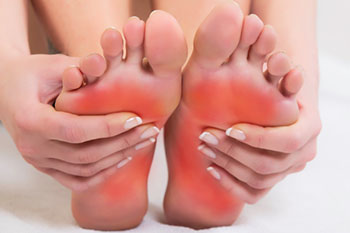
The feet serve as the foundation of the body. When pain is experienced, it’s therefore extremely important to identify early on what and where the issue is. The causes of foot pain vary greatly, including but not limited to diseases, deformities, improper footwear, and injuries pertaining to the foot region.
Those who experience foot pain may also notice redness, swelling, soreness, bruising, or numbness present at the injured area. When these symptoms occur, it’s important to also identify where the pain experienced is located, as there are a number of foot complications that could be at the root of the problem. For example, different foot conditions can affect different areas such as the heel, ball of the foot, foot arch, the toes, or ankles, to name a few.
Common heel pain conditions include heel spurs and heel fractures. Morton’s neuroma is a condition that often comes with pain experienced at the ball of the foot, as well as sesamoiditis. Those suffering from discomfort in their arches may have flat feet or plantar fasciitis. Common issues that affect the toes include gout, bunions, blisters, corns and calluses, as well as hammertoe and ingrown toenail. An ankle sprains is also a common ailment that can lead to foot pain.
Treatment for foot pain varies for each case, depending on both the cause of pain and the location of the affected area. The most common recommendations for easing the discomfort of foot pain include the following: getting plenty of rest, icing and heating the area in which pain is felt, pain relievers, and keeping the foot elevated to avoid swelling.
If you’re experiencing foot pain, we recommend that you meet with a podiatrist as soon as possible for a proper diagnosis and suggested treatment plan.
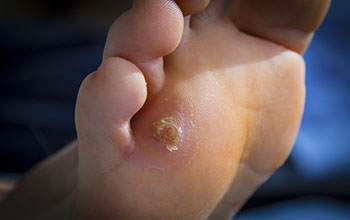
Corns are thickened areas on the skin’s surface, and they can be irritating and painful. Corns are commonly found on the feet, and they are typically circular or cone-shaped. They develop where there are areas of pressure or friction, such as on the little toe when it rubs up against shoes, or on the ball of your foot.
While corns are often confused with calluses, there is a difference between them. Corns are raised bumps that consist of rough, thickened areas of skin that may be dry or waxy. They also tend to be surrounded by skin that is inflamed and are usually much smaller than calluses.
The best treatment for a corn varies from person to person and is best determined by a podiatrist. Certain topical over-the-counter products may be suggested, or a more serious treatment may be prescribed. Diabetics should consult with a podiatrist immediately if they have developed a corn, as small wounds such as corns can potentially develop into more serious conditions.
Orthotic inserts, which are fitted by a podiatrist, may also help with treating corns. Inserts fit right into the shoes and adjust the way the feet fit into the shoes, thus fixing the way one walks. Proper-fitting orthotics can help reduce friction, which can in turn help reduce corn formation and exacerbation.
Surgery is rarely used to treat corns, but does occur on occasion. Corn surgery deals with the underlying issue that causes corns to develop. During surgery, the bone is shaved and any abnormalities are corrected, thus reducing the amount of friction that occurs during walking.
To prevent corns, the first step is reducing friction. Always wear shoes that fit well and don’t rub the feet. Wearing cushioned insoles in your shoes can also reduce friction. While there are many ways to prevent corns, it is best to consult a podiatrist with any questions you may have.
I had the pleasure of visiting Dr. Kim for my foot issues, and I couldn't be more impressed with his expertise and professionalism. Dr. Kim's compassionate care and attention to detail truly set him apart. He took the time to thoroughly explain my condition and treatment options, making me feel comfortable and well-informed throughout the process...
Had a wonderful experience with Dr. Kim. He explained the options we had to treat an ingrown toenail. He was thorough in discussing the procedures, benefits and concerns of each option, the treatment process as a whole, and the related costs. Dr. Kim is very friendly, pleasant to talk to and willing to answer all our questions to help us decide the correct procedure. I cannot say enough good things about Dr. Kim.
Dr. Kim is one of the few doctors who truly puts his patients' well-being first. He listens, offers effective treatments, and even considers your financial situation. What really stands out is the personal touch—his team follows up after your visit to check in, which makes the whole experience feel warm and caring. It’s rare to find that level of care these days!!
Connect With Us