




We practice a minimally invasive approach to your foot or ankle problem with surgery as the last option.
We practice a minimally invasive approach to your foot or ankle problem with surgery as the last option.
Trusted Experts in Foot Care
Avid Foot & Ankle is a full service podiatric center dedicated to helping our patients achieve the best possible foot and ankle health. We create customized treatment plans that are focused on the individual’s needs, condition, and lifestyle. Our practice serves the communities of Little Elm, Prosper, Frisco, Savannah and Aubrey!
We offer a wide range of foot and ankle treatments with a special interest in sports medicine and both conservative and surgical interventions. We welcome patients of all ages including pediatrics and adolescents. Athletes and those who lead an active lifestyle are also encouraged to come and discover our non-invasive alternative treatments for their foot and ankle ailments.
Our office staff is always friendly and accommodating. We thoroughly clean and disinfect our office after every patient visit to ensure the health and safety of both our staff and patients.
Welcome to our practice where we have an avid interest in your foot and ankle health!
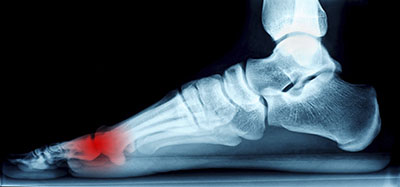
Morton’s neuroma may develop when the tissue around one of the nerves leading to your foot begins to thicken. When this occurs, you may experience some discomfort as if you were standing on a pebble stuck in your shoe. Most symptoms will not appear outwardly and will be experienced in the form of a sharp, burning pain in the ball of the foot, as well as a stinging or burning feeling in the toes that may sometimes lead to numbness.
Some factors that contribute to the formation of Morton’s neuroma include wearing high heels or ill-fitting shoes that put extra pressure on your toes or the balls of your feet. There has also been a tie to the development of Morton’s neuroma and certain high-impact sporting activities. Activities you may want to avoid from participating in too frequently include both jogging and running. Too much repetitive trauma can cause a strain on the feet and increase the chances of developing a foot complication. Other sports that require the use of tightly worn shoes, such as skiing or rock climbing, may also increase your chances of getting Morton’s neuroma. Certain foot deformities can also lead to the development of Morton’s neuroma. Some of these deformities that increase the likelihood of getting this condition include bunions, hammertoes, and flat feet.
Treatment for Morton’s Neuroma will often vary, depending on the severity of a patient’s condition. In some cases, injections may be helpful for alleviating pain. Another form of treatment is decompression surgery, in which a podiatrist will work to alleviate the pressure on the nerve. In more severe cases, full removal of the nerve would be required.
If you’d like more information about Morton’s neuroma, we suggest you consult with a podiatrist for a proper diagnosis and recommended treatment plan.
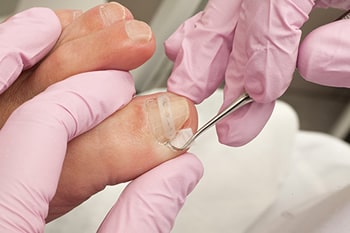
Ingrown toenails can form when the side of a toenail begins to grow into the flesh surrounding the nail. As a result, the affected toe—most commonly the big toe—may become red, swollen, painful, and—in severe cases—infected.
There are many reasons why an ingrown toenail may develop. Improperly cutting your toenails is a major cause of ingrown toenails. If toenails aren’t cut straight across or are cut too short, the likelihood of getting an ingrown toenail may increase. Other causes include having unusually curved toenails, wearing shoes that don’t give your toes an ample amount of space, and hereditary factors. Injuring the toe by stubbing it or having an object fall on it may also lead to ingrown toenails. If left untreated, an ingrown toenail can lead to further complications with the foot.
If you are someone who has diabetes, it’s extremely important to remain mindful of ingrown toenail prevention, as minor cuts or simple scrapes can lead to serious complications. You can prevent ingrown toenails by ensuring toenails are straight across and at a moderate length, wearing shoes that fit properly, and checking feet daily for signs of foot issues.
Treatment for an ingrown toenail will vary on a case by case basis. One form of treatment requires lifting the ingrown nail and placing a splint or piece of cotton underneath. Another method for a more severe case would involve partially removing the nail. For cases that need extreme care, the nail itself and tissue would have to be removed.
If you’d like more information about ingrown toenails, we recommend you consult with a podiatrist who can give you a proper diagnosis and go over your treatment options.
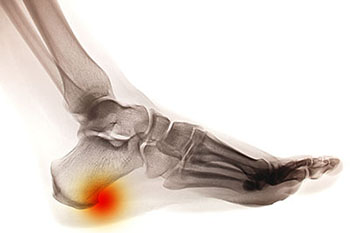
Heel spurs are brought upon by a calcium deposit that causes a bony protrusion on the underside of the heel bone. It normally forms over time and can best be diagnosed through an x-ray examination. Heel spurs are commonly linked with plantar fasciitis, an inflammation that runs along the bottom of the foot. Common symptoms of heel spurs include pain towards the affected area, inflammation, and swelling at the front of the heel.
There are different causes that may lead to a heel spur including poorly fitted shoes, excess weight or obesity, repetitive stress from running or jogging on hard surfaces, and arthritis. Treating a heel spur often requires a lifestyle change as well as getting plenty of rest. Using cold compresses is another method to help alleviate the discomfort of a heel spur. To prevent further damage, it may be useful to look into wearing shoe inserts or custom orthotics.
Practicing different exercises can help reduce the pain of heel spurs as well decrease inflammation you may be experiencing. Some of these helpful exercises include calf stretches performed either against a wall or on steps, foot rolls with a golf or tennis ball, seated foot flexes, and towel grabs with your toes. Heel spur prevention can start by understanding the everyday stresses put on your feet and knowing when to let your feet rest. It’s also important to not let heel pain go uncared for. Once you notice something is off, take action instead of waiting to see if it goes away.
If you’d like more information about heel spurs, consult with a podiatrist who can provide you with a proper diagnosis and professional care.
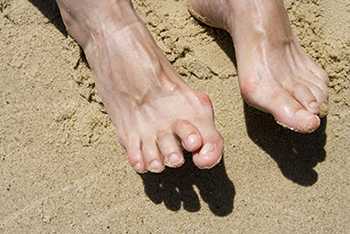
Hammertoes can be identified by an abnormal bend in the middle joint of the toe. This abnormal bending can lead to added pressure on the toe when wearing shoes. It can also cause pain or discomfort when walking or running. Because hammertoes typically worsen overtime and become increasingly more rigid, it’s recommended that you seek the help of a podiatrist for treatment options if you believe you’re experiencing the symptoms of this deformity.
Those experiencing hammertoe may also find other foot related issues that come with this condition, such as corns or calluses. Some factors that may influence your likelihood of getting hammertoe include old age, toe length, improper footwear, and genetics. Those who have diabetes or arthritis are also more likely to have foot related complications, including hammertoe.
To help better prevent yourself from getting hammertoe, it’s recommended that you avoid wearing shoes that limit the room for your toes. Footwear with low heels, as well as adjustable straps or laces, can be useful when it comes to providing your feet with ample room to move. Buying shoes that fit are also important, which is why we recommend shopping at the end of the day when your feet are at their largest. This helps you avoid choosing a shoe too small for your feet.
Orthotics, as well as medical pads for corns and calluses that may develop due to your hammertoe, are recommended to help relieve discomfort. Light toe exercises may also be helpful for strengthening the muscles and mobility of your toes.
For a proper diagnosis and recommended treatment plan, we suggest you consult with a podiatrist for professional help and care.
I had the pleasure of visiting Dr. Kim for my foot issues, and I couldn't be more impressed with his expertise and professionalism. Dr. Kim's compassionate care and attention to detail truly set him apart. He took the time to thoroughly explain my condition and treatment options, making me feel comfortable and well-informed throughout the process...
Had a wonderful experience with Dr. Kim. He explained the options we had to treat an ingrown toenail. He was thorough in discussing the procedures, benefits and concerns of each option, the treatment process as a whole, and the related costs. Dr. Kim is very friendly, pleasant to talk to and willing to answer all our questions to help us decide the correct procedure. I cannot say enough good things about Dr. Kim.
Dr. Kim is one of the few doctors who truly puts his patients' well-being first. He listens, offers effective treatments, and even considers your financial situation. What really stands out is the personal touch—his team follows up after your visit to check in, which makes the whole experience feel warm and caring. It’s rare to find that level of care these days!!

Connect With Us